|
|
|
||||
|
|
|
||||
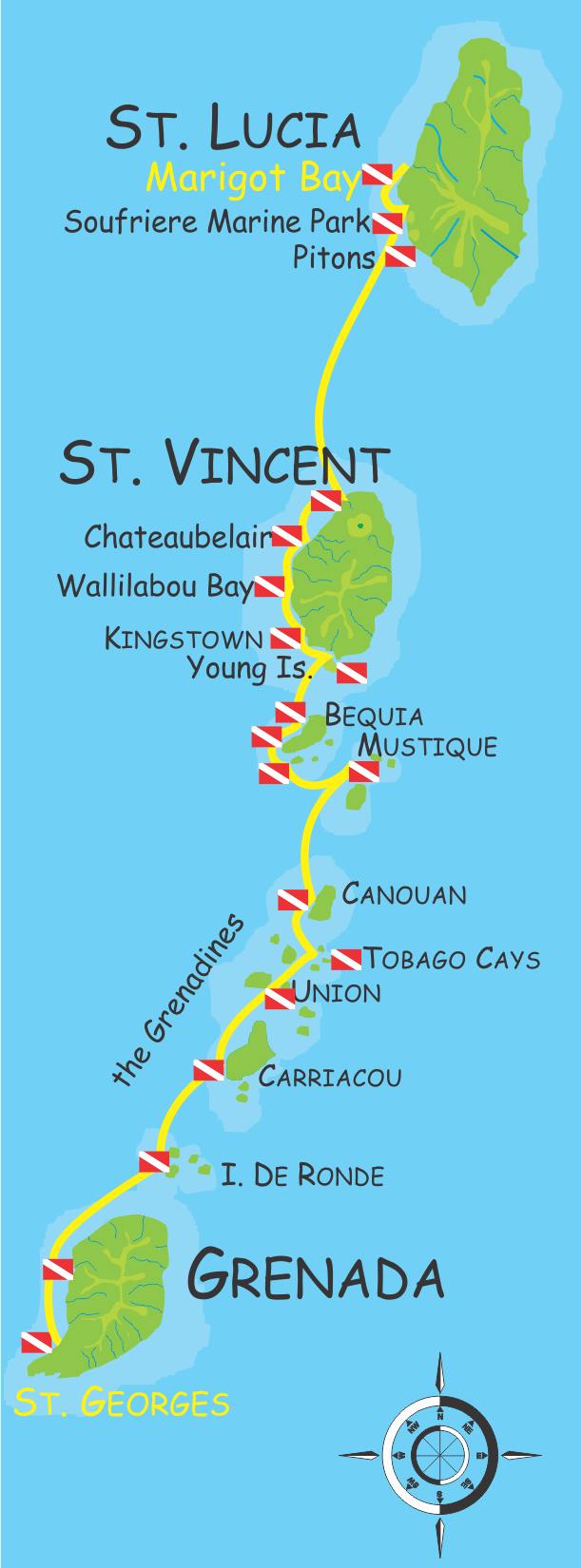
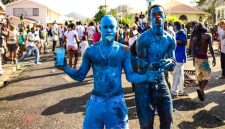
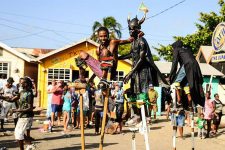
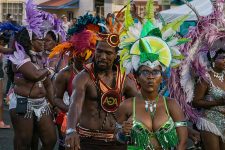
The Culture On CarriacouThe Culture of Carriacou has many origins and is hence a rich and varied mix of cultures which has made up a whole new one. Read about the Big Drum and Saraca. About yearly events like Shakespeare Mass , Carnival and J'Ouvert early in the year with later on Parang in the time before christmas.There are many Myths and beliefs on the islands, many with their heritage back in Africa. Customs And Traditions Prepared and Presented by Tony Joseph At 2002 Black History Month Celebration in Toronto ? Feb. 17/02 For those of you that are hearing about Carriacou for the first time, I would like to take a few minutes to give you a bit of information about the Island. Carriacou is the largest of the Grenadine islands and is a dependency of Grenada. It is located approximately 25 nautical miles North of Grenada, is 13 square miles in area and has a population of approximately 8,000 people most of whom are of the Negro race with African ancestry. A small percentage of the population (between 5 and 10%) is of German, Scottish and French ancestry. Although Carriacou is small in size, it is rich in African Customs and Traditions when compared to some of our larger neighbouring Caribbean Islands. As part of this presentation, I was asked to mention any rituals that we may perform that are associated with Rights of Passage or Coming-of-Age. To put it in simpler terms, this is the transition from adolescence to adulthood. In Carriacou, we do not have a formal Coming-of-Age ritual for young people as performed by some of the African cultures. There is a phrase that is commonly used, ?it takes a village to raise a child?. Well, I can say this was very evident in Carriacou when I was a youngster growing up on the Island. As a matter of fact, I can say that we were raised by the whole Island. From the moment a child left his or her parents house to go out, there were always a set of adult eyes monitoring his/her behaviour along the way until he/she returns home. I should note that in Carriacou, everyone is related through either marriage or bloodline, so no matter where you went there were always a relative or family friend that will be monitoring your behaviour. These adults also had the privilege to discipline a child on the spot and he/she dare not go home and complain because he/she would be disciplined again by a parent. Adults were always referred to as Cousin (e.g. Cousin Frank) and regardless of how many times you may cross paths for the day, you as a child was expected to acknowledge his or her presence by saying Good Morning or Good Evening, and so on. As a result of these strong disciplinary customs there were very few problems with the youths of the Island. Unfortunately, it is not quite the same today. However, you will find that it is considered "good manners" to say Good Morning or Good Evening when you pass someone on the street. Now, I may not be able to give you a plausible explanation for the meaning of some of the Customs that I will be talking about but none-the-less, we observed our parents perform a number of different rituals and we just continued with the Tradition. My talk today will cover three major topics namely the Traditional Carriacouan Wedding, rituals associated with Death, and a village festival known as a Maroon. However, before I get into these topics, I would like to talk briefly about two rituals that are commonly performed in all of the topics that I will be speaking about today. These are Wetting of the Ground and Big Drum. Wetting of the groundIn Carriacou we revere our dead and they are always remembered in just about every thing we do. We communicate with them spiritually in our daily lives.The Wetting of the Ground is a significant part of Carriacouan culture and it is used in remembrance of our dead in just about every occasion for celebration or undertaking a difficult task. For example, whenever, we open a new bottle of alcohol the first drink is poured onto the ground with some water and/or pop as an offering to our dead relatives and friends. Even if the bottle was already opened, and you are having a drink to celebrate a birthday, wedding anniversary or a friend?s safe return from a vacation, for example, the ritual of ground wetting must take place to give thanks to God and invite our dead relatives to celebrate with us spiritually. The ancestors must be honored with the ritual of Wetting The Ground, The Ground Wetting is conducted on a larger scale at ceremonies such as Weddings, Stone Feasts, Parents Plates, Thanksgiving Celebrations and Big Drum. Music and DanceThe Big Drum is an African drum dance that is included in all major festivities such as Weddings, 9th and 40th Night Celebrations, Parents Plate or Sarraka, Stone Feast or Bomennaire (erection of a head stone), Maroons, Thanksgivings and on Cambulet Nights where a stick dance is usually performed to the Big Drum. The spectators usually form a circle around the drummers, singers and dancers. The dance begins with what is called the ?Opening of the Ring? at which the host family performs the ritual of ?Wetting of the Ground? to the Big Drum beat. T he musicians are usually 3 or more drummers (head or cut drum, and 2 bulla drums) and 6 or more singers most of whom are women. Most of the songs are sung in an African dialect but a few are sung in English, as well as French Patois. The drumbeats, rhythms are dances are representative of various African Nations. The following are some of the different dances in our culture: The Callender This is a slow dance with a lot of flare or gambash, as we say locally, that is performed only by strong males. It is originated from the Congo Tribe. It is a sort of courtship dance. The Cud This is the most popular of the dances and is performed by both men and women. Its origin is from the Ebo Tribe. The Cut The dance is usually for the less skilful and one is usually replaced in the ring by another dancer that feels that he/she has something better to offer. The Temnair This is a very skillful dance that is performed mainly by women. This is also from the Ebo Tribe. The Chicky Mellow This is a very joyful and happy dance that originated from the Swahali Tribe. The Stick Dance This is a very skilful and dangerous dance that is performed only by men and its origin is from the Zulu Tribe. This dance is typically performed on Cambulay Night, which is the Sunday night of Carriacou Carnival. This event is usually held at a location known as Thief . Ashanti and Cramanti are also tribal dances that are performed at Big Drum dances. The songs that sung at a Big Drum are usually selected to suit the occasion. For example there are songs for Weddings, Prayer Nights, Maroons, Parents Plate and Thanksgivings. While I am on this topic I would like to acknowledge some of our legendary drummers Sugar Adams, Pofellar Corion, Hence Gay, Daniel Akins and Prince Lawrence and dancers May Adams, Seeday McGilvary Sae Gold and Lucian Duncan to name a few. These people have made substantial contributions in keeping the culture alive in Carriacou. Links*Laurence LiebermanExtract : On Carriacou live masters of the ?big drums,? Winston Fleury and Sugar Adams, whom folk music scholar Alan Lomax field-recorded in 1962, and legendary dancers Matilda and Aunt Collie ? just a few of the larger-than-life characters who have shared their days and nights, food and drink, stories and personal mythologies with Lieberman, who well into his tenure at Illinois, felt compelled to study a second discipline, anthropology. He has been fusing the two fields ever since. ''In ?A Hemiplegic?s Romance,? a series of strokes ended Adams? drum mastery, but a forgotten drum, long buried in a forest shack and resurrected by Fleury, magically pulled the drummer out of his paralysis, if only temporarily. In the poem, Adams is visited by a ?surprise breakout? of restored ability on the goatskins, suddenly able to work his ?full range of pyrotechnics ?? The drum?s power also moves Adams? former dance partner, Matilda, now stroke-afflicted and confined to a wheelchair. From a distance, she hears ?Sugar walloping / de drums,? and orders her granddaughter to ?Quick, wheel me to him.? Then, ?Popping / from her chair, she spun into her best dance pirouettes, / soon rollicking at Sugar?s side like a nymphet / of sixteen?. Following his last drum thumps, they would both droop / into torpor, lame again.?'' |
|||||
|
|||||
|